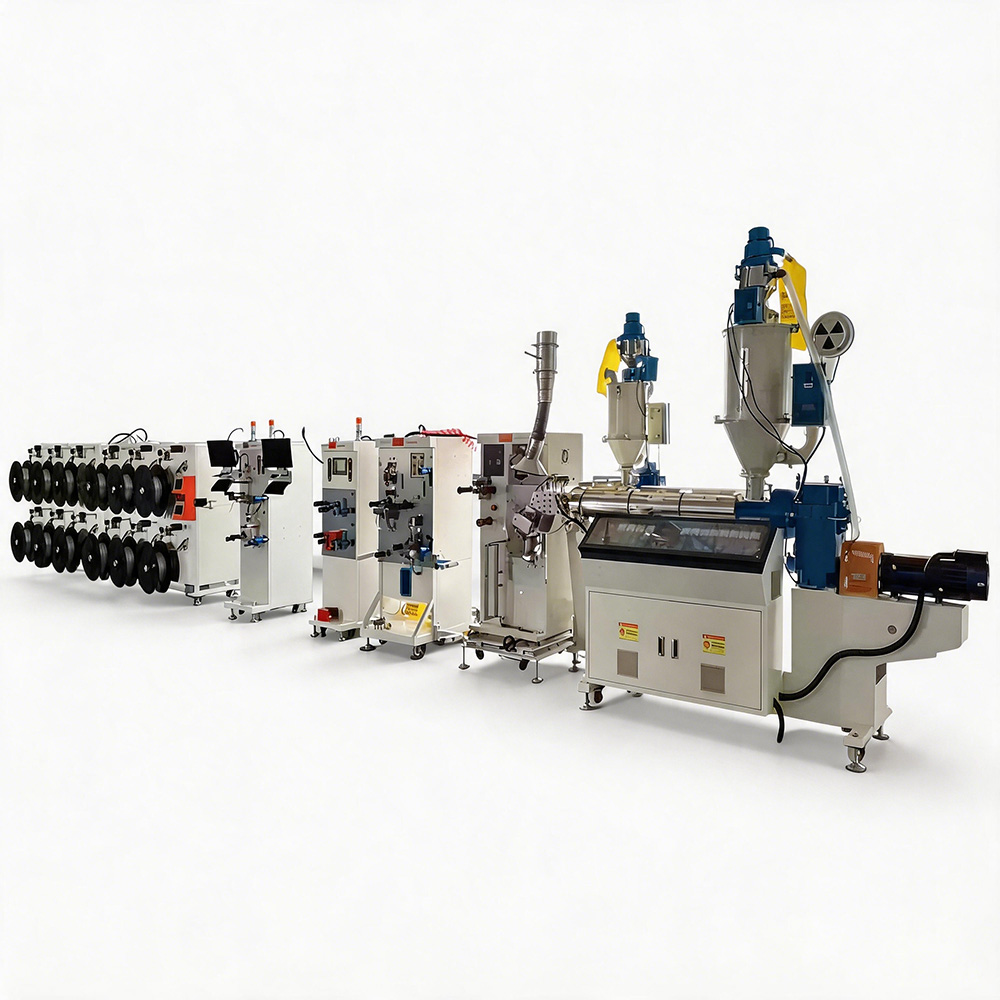
A comprehensive guide to understanding how precision carrier tapes are manufactured for the semiconductor and SMT industries
Введение
Carrier tape — the backbone of modern surface-mount technology (SMT) component packaging — is a precision-engineered thermoplastic strip that holds electronic components during storage, shipping, and automated assembly. Whether you are manufacturing semiconductors, LEDs, or passive components, the quality of your carrier tape directly impacts placement efficiency, component protection, and yield rates.
At Jenten, we have spent years refining the carrier tape forming process. This step-by-step overview walks you through the complete manufacturing workflow — from raw material preparation to finished reel — explaining the critical parameters that determine tape quality, dimensional accuracy, and production efficiency.
Step 1: Raw Material Selection and Preparation
Material Selection: PC vs. PS vs. PET
The carrier tape forming process begins with selecting the appropriate thermoplastic material. The most common materials are:
| Material | Properties | Typical Applications |
|---|---|---|
| Polycarbonate (PC) | High impact strength, excellent dimensional stability, transparent | High-reliability components, optical devices, automotive electronics |
| Polystyrene (PS) | Cost-effective, good formability, available in conductive grades | Consumer electronics, general-purpose SMT components |
| PET (Polyethylene Terephthalate) | Good heat resistance, dimensional stability | High-temperature applications, specialized packaging |
Many manufacturers use multi-layer tapes — for example, conductive PS outer layers combined with a transparent PC core. This structure provides both ESD protection and mechanical strength while optimizing material costs .
Raw Material Drying
Thermoplastic materials are hygroscopic — they absorb moisture from the air. Even small amounts of moisture can cause severe defects during forming, including:
- Surface bubbles and voids
- Poor pocket definition
- Inconsistent shrinkage
- Reduced impact strength
Proper drying is therefore critical. Materials are typically dried in industrial ovens at temperatures specified by the material supplier, often 70°C to 130°C depending on the resin type, until moisture content falls below 0.02%. At Jenten, our integrated forming systems include a pre-heating chamber that maintains material dryness throughout the production process, preventing moisture reabsorption in humid environments.
Step 2: Extrusion or Sheet Feeding
Depending on the machine configuration, the process follows one of two paths:
Extrusion-Type Forming (Pellet to Tape)
In this configuration, plastic pellets are fed directly into an extruder, melted, and formed into a continuous sheet of precise thickness . This “pellet-to-tape” approach offers several advantages:
- Cost efficiency — Eliminates the intermediate sheet purchasing step
- Material control — You control the exact formulation and color
- Multi-layer capability — Co-extrusion allows simultaneous production of 3-layer tapes
The extruded sheet passes through a series of calibration rollers to achieve uniform thickness before entering the forming station.
Sheet-Fed Forming (Pre-extruded Tape)
Alternatively, pre-extruded tapes (already slit to the required width) are fed directly into the forming machine. This approach is common for smaller production runs or when working with specialized materials that require different processing conditions.
Step 3: Preheating
Before forming, the tape must be heated to its softening temperature — the point at which the material becomes pliable enough to take the pocket shape without cracking, yet not so hot that it flows uncontrollably.
A typical preheating profile:
- Preheater: Gradually raises temperature to 70-80°C
- Main heater: Brings the tape to softening temperature (typically 130-200°C depending on material)
The preheating step serves multiple purposes:
- Удаление влаги — Eliminates any residual surface moisture
- Temperature stabilization — Ensures uniform heat distribution
- Process control — Allows precise adjustment of forming temperature for different materials and thicknesses
At Jenten, our forming systems employ independent hot air blowers (up to 4400W) with adjustable temperature and airflow, giving operators fine-grained control over the thermal profile.
Step 4: Pocket Forming
This is the heart of the carrier tape manufacturing process. The heated tape is pressed into a series of pockets (cavities) that will hold individual electronic components.
Two Primary Forming Methods
| Method | Mechanism | Key Characteristics |
|---|---|---|
| Роликовый (вращающийся) | Tape passes over a rotating drum with convex molds mounted on the circumference | Continuous high-speed production, ideal for 1-to-4 and 1-to-6 configurations, excellent consistency |
| Плоскопанельная (прерывистая) | Tape is pressed between heated flat plates with concave cavities | Suitable for deeper pockets and thicker materials, lower production speed |
The Roller-Type Forming Process
In roller-type forming, molds (male or convex shape) are mounted at equal intervals around a rotating drum . As the heated tape passes over the drum:
- The tape begins to drape over the convex molds
- A hold-down roller presses the tape against the molds
- Vacuum suction applied through slits at the roots of the molds draws the tape into complete contact with the mold surface
- The tape takes the shape of the pocket cavity
Vacuum pressure is critical here. Insufficient vacuum results in incomplete pocket formation; excessive vacuum can cause material thinning. For 1-to-6 production, maintaining consistent vacuum across all six lanes requires precision engineering.
Cooling and Demolding
After forming, the tape must be cooled before it can be removed from the molds. Cooling is typically achieved by spraying coolant (often air mixed with water mist) onto the formed tape while it remains on the mold .
A critical advantage of convex (male) molds: As the tape cools, it shrinks. With concave molds, this shrinkage can cause the pocket to deform as it contracts away from the mold surface. With convex molds, the tape is pressed onto the mold, and the shrinkage is constrained — preventing deformation .
Step 5: Precision Punching
After pocket forming, the tape moves to the punching station. Here, sprocket holes (index holes) are created along both edges of the tape. These holes engage with the sprocket wheels of automated SMT placement machines, ensuring accurate positioning during component pick-up.
Critical Punching Parameters
Параметр | Требование | Impact
P2 pitch accuracy | ±0.03mm or better | Ensures smooth feeding through SMT machines
Hole diameter | Down to 0.2mm | Enables narrow tape widths and high-density packaging
Burr control | Minimal to zero burr | Prevents dust generation and feeder jams
To achieve ±0.03mm pitch accuracy, advanced systems employ:
- Independent servo motor control (0.75KW) for precise punching timing
- In-die precision positioning using guide pins
- High-speed precision dies manufactured with slow-wire EDM (8 guide bushes, 4 guide posts)
Quality punch dies also feature quick-change mechanisms allowing die replacement in under one minute — a significant efficiency advantage for production environments requiring frequent changeovers.
Step 6: Slitting
For multi-lane production (1-to-4 or 1-to-6 configurations), the wide tape must be slit into individual carrier tape lanes. The slitting unit uses circular blades to make precise cuts between lanes.
Key Slitting Considerations
- Blade material: Tungsten carbide (WC) or high-speed steel for wear resistance
- Blade overlap/gap: Adjustable to accommodate different material types and thicknesses
- Burr-free cutting: Proper blade geometry and alignment prevent edge burrs that could damage components or feeder equipment
At Jenten, our slitting units feature independent step motor control and adjustable blade overlap — ensuring clean cuts for any material from 0.1mm to 0.4mm thickness .
Step 7: Quality Inspection and Cleaning
Quality inspection is not an afterthought — it is integral to the process. Leading manufacturers incorporate Automatic Optical Inspection (AOI) directly into the production line.
Visual Inspection Capabilities
Resolution | 5 Megapixel (Standard) | 10 Megapixel (Optional)
Detection targets | Dimensional variations, surface scratches, contamination, burrs | Same defects with higher precision
Output | Real-time dimensional curves, CPK statistics, defect classification | Enhanced resolution for micro-defect detection
Defect images are automatically categorized and stored for:
- Traceability — Linking defects to production batches
- Process improvement — Identifying recurring issues
- Customer documentation — Providing quality assurance records
Cleaning Systems
After punching and slitting, the tape may contain:
- Punching debris — Small particles generated by the punching action
- Static charge — Attracting dust and contamination
- Edge burrs — Micro-scale material projections
Multi-stage cleaning is standard practice:
- Mechanical brushing — High-speed rotating brushes remove loose particles
- Ionizing air guns — Neutralize static charge and blow away remaining contamination
Step 8: Rewinding and Packaging
The final step is winding the finished carrier tape onto reels, ready for shipment to the customer. This may seem straightforward, but it is one of the most critical steps for maintaining tape quality.
Tension Control
Inconsistent tension causes:
- Telescoping (the tape layers shifting sideways)
- Wrinkling
- Difficulty unwinding at the customer’s facility
- Damage to pockets
Proper tension control involves:
- Weighted dancer arms with engraved scales for reproducible settings
- Individual tension adjustment for each lane
- Winding logic that accounts for tape thickness, width, and material properties
Advanced systems allow operators to set:
- Winding overlap distance — How much the tape overlaps itself during winding
- Return angle — When the tape reverses direction at the reel flange
- Reel width adaptation — Single-origin setup for changing reel sizes
Standards Compliance: EIA-481-D
The entire carrier tape manufacturing process must comply with EIA-481-D, the international standard for embossed carrier taping of surface-mount components .
EIA-481-D specifies:
- Pocket dimensions
- Sprocket hole size and spacing
- Tape width tolerances
- Leader and trailer requirements
- Reel specifications
Compliance with this standard ensures that carrier tapes from different manufacturers can be used interchangeably on automated SMT equipment worldwide.
For the Jenten 1-to-6 High-Speed Roller-Type Embossing Machine, compliance with EIA-481-D is verified through:
- Dimensional measurement per standard specifications
- CPK analysis to demonstrate process capability
- In-process quality control checkpoints (self-inspection every shift)
1-to-6 Configuration: Efficiency at Scale
The 1-to-6 configuration represents the optimal balance between production efficiency and quality control.
Production Options:
| Ширина ленты | 1-to-4 Configuration | 1-to-6 Configuration |
|---|---|---|
| 8mm | Yes | Yes |
| 12mm | Yes | Yes |
| 16mm | Yes | Yes |
| 24mm | Yes | Yes |
Each lane can be independently monitored for temperature, vacuum, and forming quality — ensuring consistent output across all six lanes. Typical line speed ranges from 4 to 10 meters per minute per lane, depending on product complexity .
Common Defects and Prevention
Understanding potential defects is essential for quality control:
| Defect | Cause | Prevention |
|---|---|---|
| Incomplete pocket formation | Insufficient heat or vacuum | Increase temperature, check vacuum system |
| Warpage | Uneven cooling, residual stress | Adjust cooling profile, ensure uniform cooling |
| Burrs on edges | Worn punch/die, incorrect clearance | Replace tools, adjust clearance |
| Contamination | Poor cleaning, static charge | Upgrade cleaning system, improve static control |
| Pitch variation | Punch timing drift, mold wear | Calibrate servo, inspect/replace molds |
Why This Matters for Your Production
Understanding the carrier tape forming process is not just academic — it has direct implications for your production:
- Yield improvement — Knowing which parameters to control reduces scrap
- Cost optimization — Understanding material and process trade-offs informs purchasing decisions
- Quality assurance — Knowledge of defect mechanisms enables proactive problem-solving
- Supplier evaluation — Insight into the process helps you assess potential suppliers
About Jenten
Jenten (河南金滕科技) designs and manufactures advanced carrier tape forming equipment for the semiconductor, SMT, LED, and consumer electronics industries. Our 1-to-6 High-Speed Roller-Type Embossing Machine integrates the entire process described in this guide — from raw material handling to finished reel — into a single, compact, and intelligent system.
Contact us to learn more about how our equipment can improve your carrier tape production efficiency and quality.
Next in this series: [Understanding EIA-481-D Standards for Carrier Tape] | [How to Optimize Forming Temperature for PC/PS Materials]
 Русский
  English (UK)
  Bahasa Indonesia
  한국어
한국어  Tiếng Việt